
Fort Worth, Texas — Texas ranchers and animal health officials are on high alert after the state confirmed its first case of New World screwworm in decades, marking a significant development in the pest’s northward spread from Central America.
The detection has renewed fears across the livestock industry, where many remember the devastating impact the parasite once had before it was eradicated from the United States.
First Texas Detection Confirmed in Decades
Federal and state officials confirmed the presence of New World screwworm after a sample was collected from a three-week-old calf with an umbilical lesion in La Pryor, Texas, located in Zavala County.
The sample was analyzed and confirmed by the National Veterinary Services Laboratory in Ames, Iowa. For many ranchers, the announcement was the news they had hoped never to hear.
“It’s something that you dread,” said Texas cattle rancher Jim Link.
Link, who has spent decades raising cattle, remembers the era before the parasite was eradicated in the United States and worries that modern livestock transportation could accelerate the spread.
“We’re moving cattle more than any other animal,” said Link.
What Is the New World Screwworm?
The New World screwworm is considered one of the most destructive livestock pests in the world.
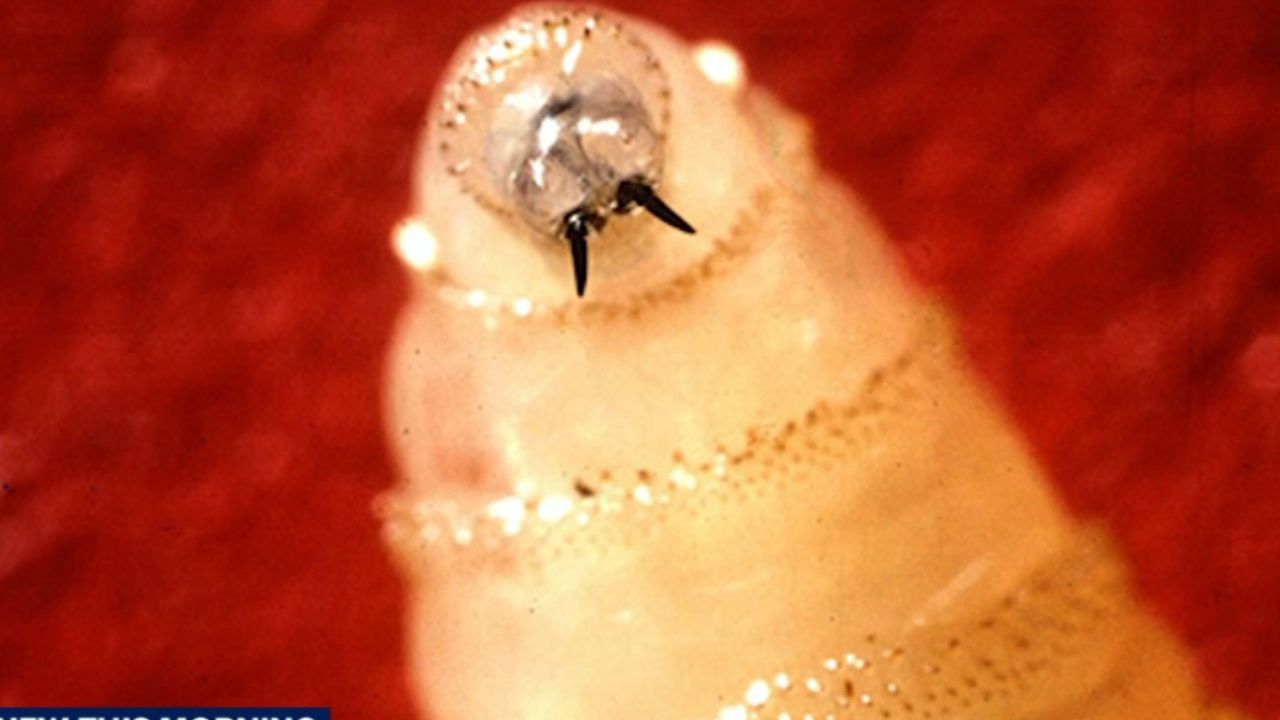
Unlike ordinary flies, female screwworm flies lay eggs inside open wounds or body openings of live animals. Once the eggs hatch, the larvae burrow into living tissue using sharp mouth hooks and feed on the flesh.
If left untreated, infestations can cause severe injury and even death. According to experts, the pest primarily affects livestock but can also infest pets, wildlife and humans.
“It causes such damage to our animals- it’s incredibly dangerous,” said Phillip Kauffman, head of the Department of Entomology at Texas A&M University.
Kauffman noted that a single female fly can lay 200 to 300 eggs in one wound, rapidly increasing the severity of infestations.
USDA Launches Emergency Response
The U.S. Department of Agriculture (USDA) has already begun deploying resources to South Texas in response to the detection.
According to Agriculture Secretary Brooke Rollins, federal officials have mobilized an incident command team and treatment stockpiles to the region.
One of the primary control measures involves releasing sterile male screwworm flies into affected areas.
“The sterile insect technique, when paired with surveillance, movement restriction and education and outreach, is the most effective strategy we have in controlling this pest,” Rollins said.
The approach prevents reproduction by ensuring sterile males mate with wild females, producing no offspring. Rollins also emphasized that the parasite spreads primarily through infected animal movement.
“The only way this spreads is through animal movement. It’s not because the fly travels tens of miles or hundreds of miles on its own,” she said.
Ranchers Urged to Stay Vigilant
Animal health officials are urging ranchers and livestock owners to inspect animals regularly for signs of infestation. Link said daily checks are now essential, especially for younger cattle with wounds that could attract flies.
Kauffman warned that failure to report suspected cases could worsen the situation dramatically.
“If people ignore that, don’t report it or move animals without inspection and treatment, we’re going to be in a world of hurt,” said Phillip Kauffman.
Officials recommend that animal owners:
- Inspect livestock frequently for larvae in wounds
- Keep wounds clean and covered
- Avoid moving animals if screwworm is suspected
- Immediately report suspected infestations to authorities
No Threat to Food Supply, Officials Say
Despite concerns within the livestock industry, officials stressed there is no threat to the food supply.
The USDA’s Food Safety and Inspection Service continues to oversee the safety of meat, poultry and egg products, and the screwworm does not infest crops such as fruits, vegetables, grains or rice.
Texas Animal Health Commission Executive Director Dr. Bud Dinges said state officials have spent years preparing for the possibility of the parasite’s return.
“TAHC has been actively preparing for a resurgence of NWS for over two years,” Dinges said. “We are putting these preparations into action, and we encourage all animal owners and caretakers to continue to remain vigilant.”
What are your thoughts on the return of New World screwworm to Texas? Share your opinion respectfully in the comments below.