
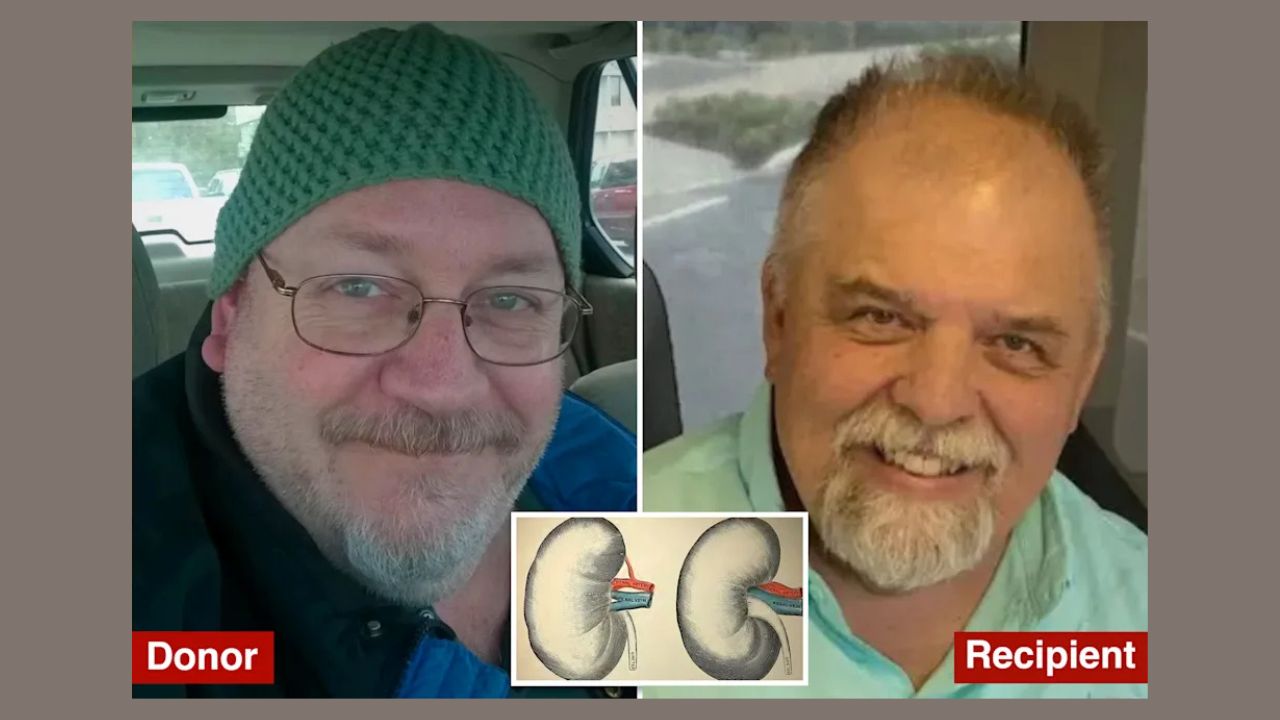
Tecumseh, Michigan — What was supposed to be a life-saving kidney transplant turned into a devastating medical tragedy after a Michigan man died from rabies that was unknowingly transmitted through a donated organ, according to health officials.
The rare case has prompted a broader investigation because organs from the same donor were reportedly distributed to recipients and researchers across multiple states.
Kidney Recipient Develops Mysterious Symptoms
Barney Kurowicki, a Michigan grandfather who had spent two years on dialysis, received a kidney transplant in December 2024 at the University of Toledo Medical Center.
The donated kidney came from James Martin, a 59-year-old Idaho father of three who had recently died.
Initially, Martin’s family believed his death was caused by heart-related complications and had no indication that rabies was involved.
“We had no idea,” Martin’s widow, Kim Martin, said of the infection.
However, shortly after Kurowicki underwent the transplant procedure, he began experiencing a series of alarming neurological symptoms.
According to a CDC report, he developed tremors, weakness in his lower extremities, confusion, and eventually an unusual fear of water, a symptom commonly associated with rabies.
Within days, he died.
Investigation Traces Infection to Organ Donor
Following the recipient’s death, investigators launched an extensive review to determine how the infection occurred. Testing eventually revealed that Kurowicki had contracted rabies from the organ donor.
Authorities later learned that Martin had reportedly been scratched by a skunk while rescuing his family’s kitten during the fall of 2024.
Kim Martin recalled how her husband dismissed the injury at the time.
“He’s like, ‘I’m — I’ll be fine. It’s just a scratch. I’ll just put, you know, Neosporin on it, and I’ll be fine after I get it cleaned,’” she said.
The family never suspected the scratch could expose him to a deadly virus.
Donor’s Illness Initially Misunderstood
After the skunk encounter, Martin reportedly became increasingly ill before eventually losing consciousness and falling into a coma.
His family attributed the health decline to other medical issues he had struggled with for years. As a result, rabies was never suspected before his organs were donated.
According to officials, donated organs are routinely screened for diseases such as HIV and hepatitis, but they are generally not tested for rabies due to the rarity of such cases and the urgent timeline involved in transplantation.
CDC Calls Case Extremely Rare
Health officials emphasized that rabies transmission through organ donation is exceptionally uncommon.
Health Warning Issued for Popular Florida Beaches After Dangerous Bacteria Found in Water
“This is a very rare event,” said David McCormick, a medical officer with the CDC who helped investigate the case. “Organ transplantation in the United States is very safe.”
McCormick also explained why universal rabies testing is not currently standard practice.
“Given that there is such a need for organs and that timing in organ donation can be very critical, if we had to wait two or three days to test every organ donor for rabies … that could delay care, could delay people receiving organs that they need.”
According to the CDC, the last reported rabies transmission through an organ or tissue transplant in the United States occurred in 2013, with another case documented in 2004.
Changes Being Considered After Tragedy
In response to the incident, a committee focused on reducing donor-derived illnesses has proposed new screening measures.
Officials are considering adding questions designed to identify potential rabies exposure in organ donors, including contact with infected wildlife.
The goal is to improve risk assessments while still ensuring critically needed organs reach patients without unnecessary delays.
As health officials continue monitoring other recipients connected to the donor, the case serves as a reminder of both the life-saving power of organ transplantation and the rare risks that can sometimes accompany it.
What are your thoughts on this unusual and tragic transplant case? Share your opinion respectfully in the comments below.