Longview, Washington — Recovery crews searching through the wreckage of a catastrophic paper mill disaster in Washington state have recovered a seventh victim, as emergency teams continue working to locate the remaining missing workers and prevent environmental contamination from spreading.
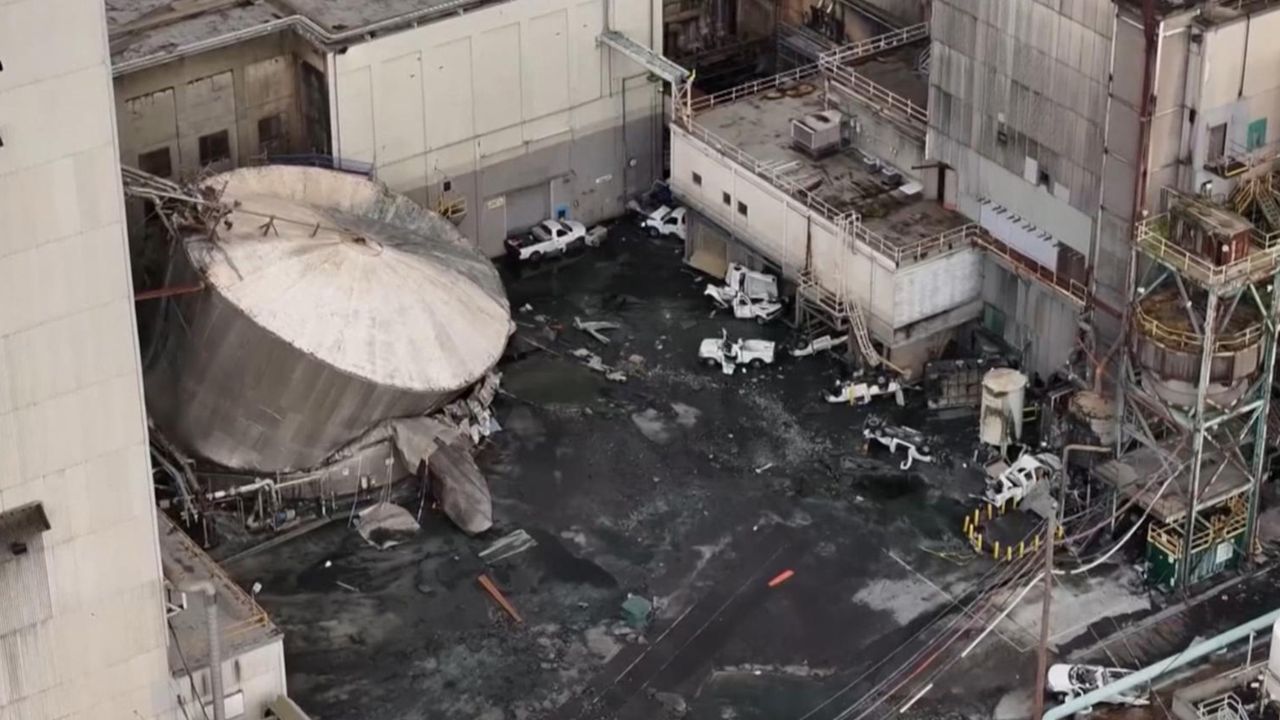
The tragedy unfolded at the Nippon Dynawave paper mill in Longview, where a massive chemical tank imploded earlier this week, creating one of the deadliest industrial accidents in recent state history.
Death Toll Continues to Climb
Officials confirmed Friday that recovery teams located the body of a seventh victim at the disaster site.
The latest discovery comes one day after authorities announced the recovery of six other victims.
According to officials, 11 people are presumed dead as a result of the incident. While several victims have now been recovered, authorities say two sets of remains have yet to be located, and search operations remain ongoing.
Recovery crews continue facing dangerous conditions while navigating the heavily damaged facility.
Victims Found Near Workers’ Gathering Area
The implosion occurred at approximately 7:15 a.m. Tuesday, during a shift change when workers were arriving and gathering for assignments.
According to Longview Fire Battalion Chief Matt Amos, several victims were discovered in a section of the facility commonly used by employees before beginning work.
“It was in an area they would congregate in the mornings, where they would assemble, find out their assignments,” Amos said.
Longview Fire Chief Brad Hannig explained that all recovered remains undergo decontamination before being transferred to the Cowlitz County Coroner’s Office for formal identification.
Crews Push Deeper Into Disaster Zone
Emergency personnel spent Friday using vacuum trucks and extensive hose systems to remove hazardous chemical water mixtures from the site.
The cleanup effort has allowed crews to move deeper into the wreckage.
“So currently, we’re working inside much closer proximity to where we’re finding the victims, which is helping our recovery of our responders and our turnaround time,” Amos said.
The damaged tank was designed to hold approximately 900,000 gallons of white liquor, a hazardous chemical solution used during paper production.
Officials said the tank was roughly 60% full when it imploded.
The chemical mixture reportedly contained sodium hydroxide, sodium sulfide and disodium carbonate.
Officials Continue Environmental Protection Efforts
Beyond the recovery mission, authorities remain focused on preventing environmental damage caused by chemicals released during the implosion.
Following the disaster, large quantities of contaminated water entered nearby drainage ditches.
According to federal officials, firefighters’ water and spilled chemicals combined to create high-pH runoff that threatened local waterways.
Viral TikTok Challenge Sends Teens to Hospital After Dangerous Benadryl Overdoses, Doctors Warn
“A large amount of volume” of contaminated material flowed into a ditch system located near the plant, according to federal on-scene coordinator Brooks Stanfield.
However, officials say cleanup efforts have begun producing positive results.
“We have started to see marked improvement in the pH levels in the ditch, the ditch system, most specifically in the ditch here, right above the well fields,” Stanfield said.
Drinking Water Declared Safe
One of the primary concerns involved contamination risks to Longview’s drinking water supply.
The affected ditch system sits above an aquifer and well field that help provide water to the city’s approximately 37,000 residents.
Despite those concerns, city officials emphasized that drinking water remains safe.
“Longview’s water is safe. There is no cause for concerns,” Public Works Director Chris Collins said.
Authorities have diverted contaminated runoff away from critical wellhead areas while using fresh water from the Cowlitz River to dilute pollutants and move them toward controlled discharge locations.
Officials also confirmed that water entering the Columbia River is being monitored to ensure pH levels remain within safe limits. Meanwhile, residents are being urged to avoid nearby ditches and drainage systems where elevated chemical levels may still exist.
Gov. Bob Ferguson has warned that the disaster could become the deadliest industrial accident in modern Washington state history as recovery efforts continue.
What are your thoughts on this tragic industrial disaster and the ongoing recovery efforts? Share your opinion respectfully in the comments below.